
Is plastic “fantastic?” Sometimes. But often plastic is just plastic — cheap, fragile, and nasty. I was on the hunt for a Nikon 28-80 kit lens to mate with my F80 for a versatile and lightweight travel combo. The lens I eventually found came bundled with a Nikon F55 body (known as the N55 in the U.S.) which, for my purposes, amounted to a glorified rear lens cap. But the camera turned out to be far more than that.
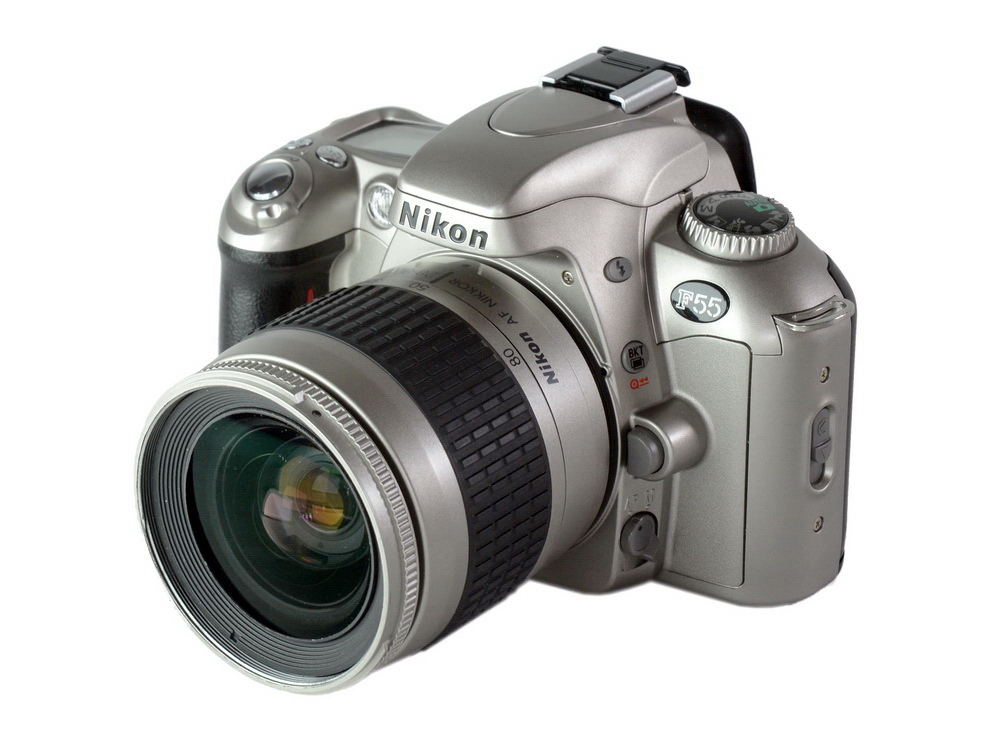
I do a fair amount of walking and hiking with my gear, so a lightweight camera outfit has great appeal. When the F55 kit arrived, I couldn’t believe how little it weighed. Hand the camera to anyone and the first thing they’ll say is, “Wow — is this ever light!” Together the body and lens tip the scales at a mere 545 grams (1.2 lbs). Even my Yashica FX-3 Super 2000, the lightest of my manual SLRs (588 grams, including 50mm f/1.9 lens), is heavier. But none of this matters if the F55 isn’t capable of good results. And thankfully it is.
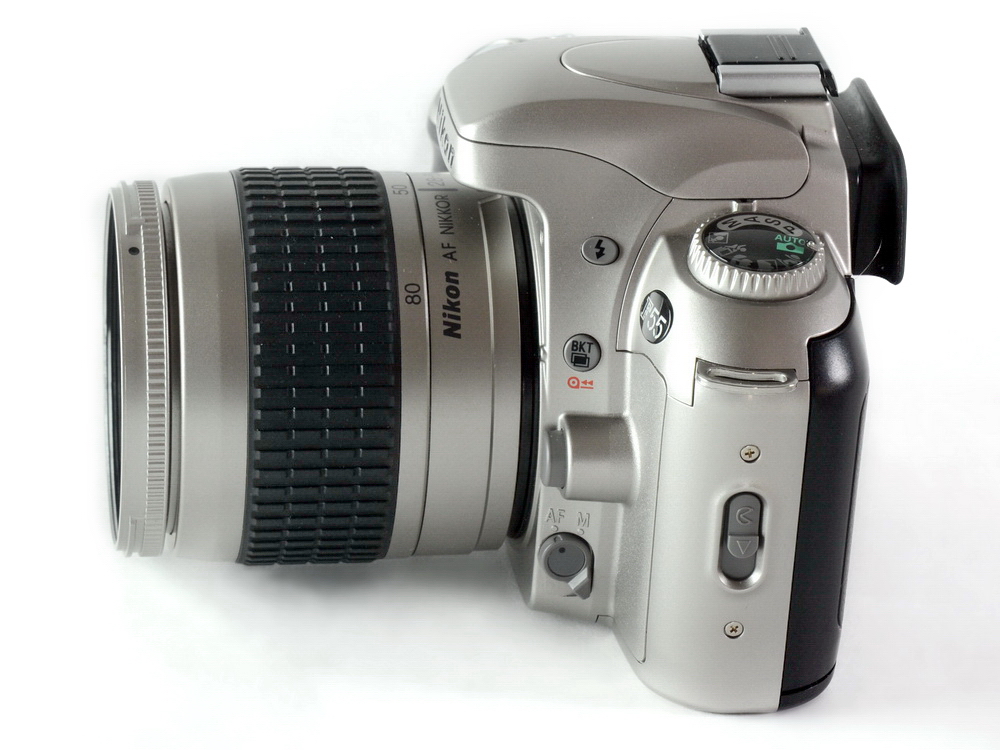
Apart from its weight, this plastic Nikon has a number of notable attributes. For one thing, it’s among the last film SLRs that the company produced. That means you have a very good chance of finding one that’s been lightly used. Indeed, the F55 that I got arrived in its original box and may have been used just a couple of times. The only thing wrong with it was the rubberized part of the handgrip had gone tacky with age — something easily fixed with isopropyl alcohol, paper towels, and a little effort. The camera is actually a pleasure to shoot and I find the nice, deep handgrip makes it very comfortable to hold. The F55’s entry-level nature is betrayed by a number of scene modes (I never use them so I don’t really know what they do), but more importantly the camera has the now-ubiquitous PSAM control set — program auto, shutter priority, aperture priority, and full manual. So long as a camera has aperture priority and full manual, I’m happy, The F55’s autofocus might be sluggish by today’s standards, but I’ve never found it to be too slow for my purposes and it does appear to be very accurate.
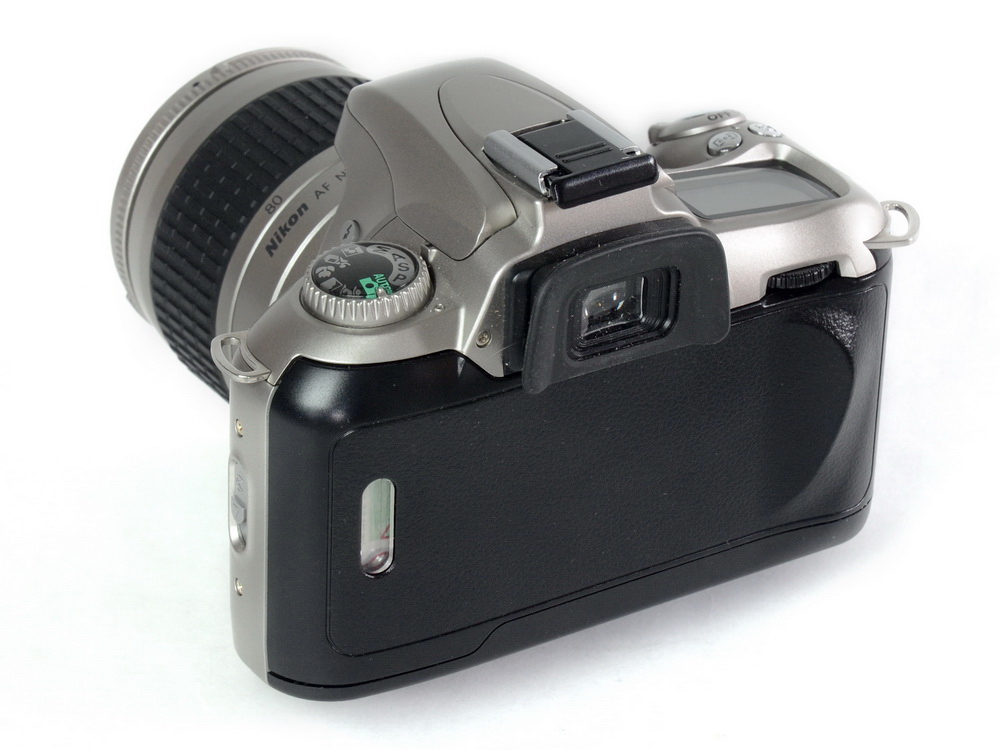
The F55 is also one of the few SLRs that draws the entire film roll out of the canister after loading, then counts backwards with each successive shot as the film winds back into the canister. I actually like this arrangement since it means that if the camera back is accidentally opened, all my exposures are safe. The downside is that you only get 36 shots from a 36-exposure roll. With other cameras I often get 37 or even 39 frames if I’m careful with how I load my film.
The main functional limitation of this little SLR is that you can’t manually set the ISO — it’s DX only. However, you can dial in +/– 2 stops of exposure compensation (in ½ stop increments), which the camera remembers even after you cycle the power. For me, that’s good enough since I generally use my films at box speed or just one stop under. For you, it might not be. Another potential limitation is not all F-mount lenses work well with the camera. You’re pretty much limited to the CPU Nikkor G- or D type AF lenses (the ones with the drive screw in the mount). I already have quite a few of those so this wasn’t a problem for me. (Ken Rockwell has an excellent chart showing lens compatibility.) Thirdly, the camera runs off a pair of CR2 batteries, which can be a little harder to source than some types, though by no means difficult. A final consideration is cosmetic. So far as I’m aware, the F55 only came in that oh-so-90s silver, which may or may not be to your tastes. (It absolutely screams amateur!) But, on the plus side, it’s unlikely anyone’s going to mug you for it.
Okay, now for the plastic elephant in the room. Yup, this camera is as plastic as plastic can be. Even the lens mount is plastic. That said, it seems to be a good quality plastic and I’m not convinced this is going to make a difference to the F55’s longevity — I suspect the electronics are the real ticking time bomb. Regardless, I expect the camera will probably outlast me unless I drop it from a height or dunk it in water. So far, I haven’t done that to any of my cameras — touch wood, er, plastic. And if plastic really isn’t your thing, there are plenty of full-metal options out there!
Lightweight, capable, and fun to shoot. What more can you for? Western Australia photographer and YouTube star Mark McMahon calls the F55 an “unassuming gem.” I couldn’t agree more. I would even call the F55 “fantastic!”
Click here for some Nikon F55 sample images.
Did you find this article interesting or helpful? If so, consider using this link the next time you shop at Amazon.com. Better yet, bookmark it for future use. Thanks to Amazon’s associates program, doing so costs you nothing yet helps keep this site up and running. Thanks!
 Subscribe with RSS









These plastic film cameras were very clever designs. They do their job well. But, will they be usable in 10, 20, 30 years?
Great review.
I wonder that about *all* my cameras!