Looking back on it now, 2004 was a big year for Nikon. That was when they introduced the D70 — arguably their first affordable digital SLR camera. It was the one that finally convinced a lot of photographers to make the jump from film to digital. (I was one of them, though I later saw the error in my ways.) For film holdouts the company still had a range of auto-focus models consisting of (from least to most expensive) the F55, F75, F80, F100, and F6. However, by 2006 only the top of the line F6 remained from that final five. Even today the F6 is a sought after piece of kit while the budget-friendly F55, F75, and F80 are often regarded as also-rans. And yet, all three have much to recommend them. I’ve already written about the F55 and F80, so now it’s time to give the middle child — the F75 — its due.
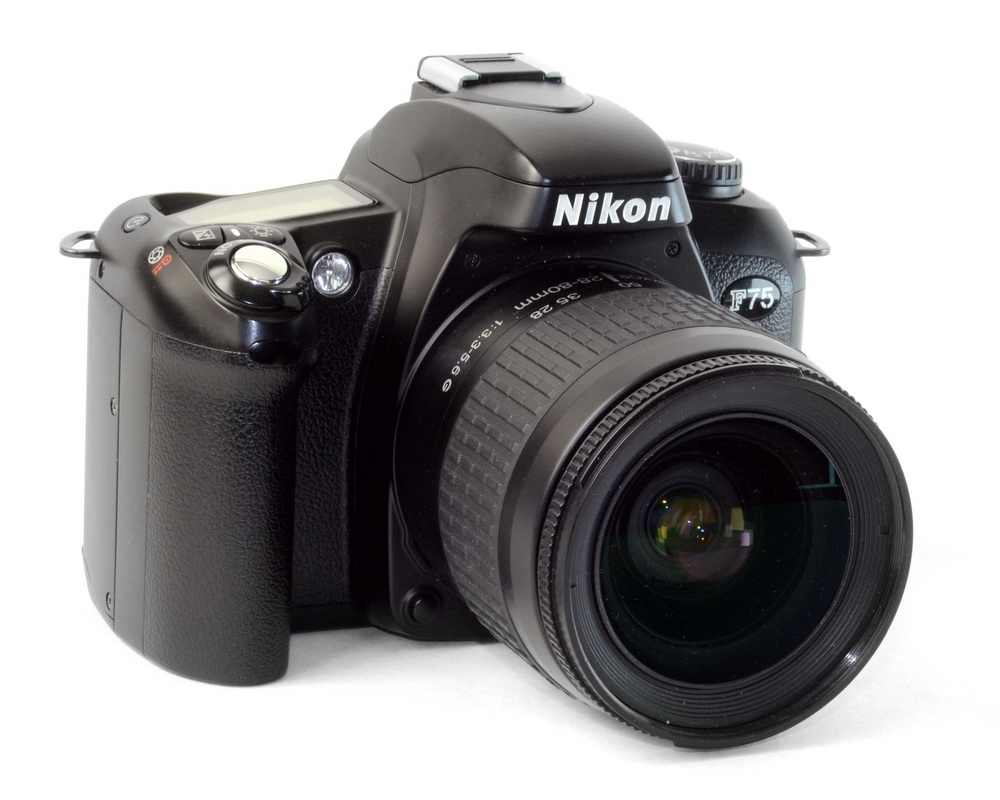
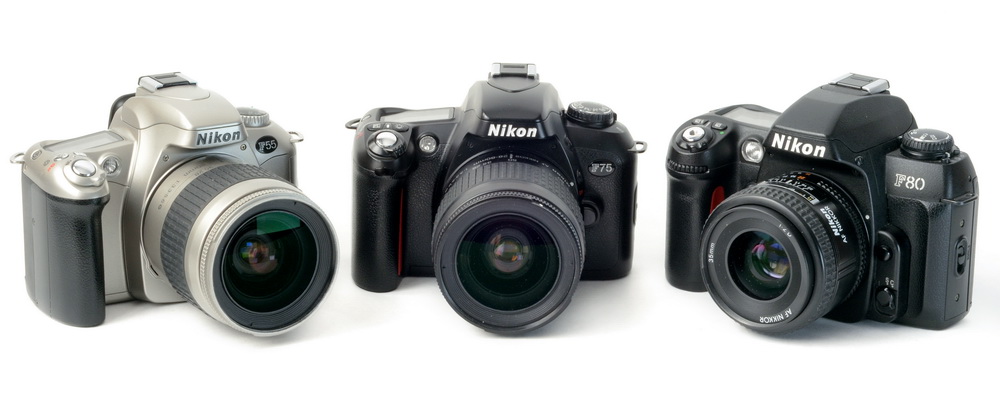
As its model number suggests, the F75 (or, N75 for Americans) is positioned between the entry-level F55 and the more fully featured F80. But does that mean it occupies the “just right” position in the Goldilocks zone of utility, or does it falls between the stools by being neither as beginner-friendly as the F55 nor as capable as the F80? Having used the F75 extensively, I’d say the answer is a bit of both.
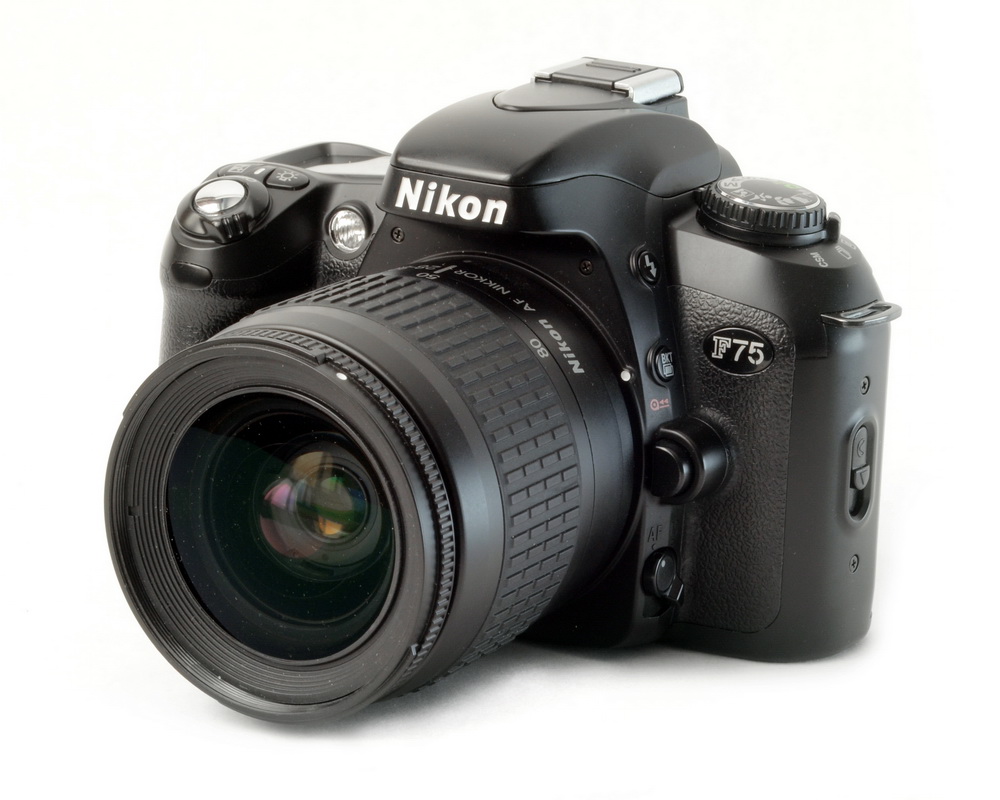
Taken on its own merit, the F75 does pretty much everything any photographer might wish for — all packed into a lightweight (albeit, plastic) package. At 406 grams (14.3 ounces) it’s just a touch heavier than the lightweight champion F55 (378 grams). You get accurate autofocus, auto-advance and rewind, sophisticated metering, a set of modes to choose from along with the standard PSAM (program auto, shutter priority, aperture priority, and fully manual) options. I don’t think it’s a “hot take” to state that if you can’t take a good picture with the F75, the problem lies with the photographer and not the camera. In short, if what you’re looking for is a lightweight, late-model autofocus Nikon SLR, the F75 is worth considering.
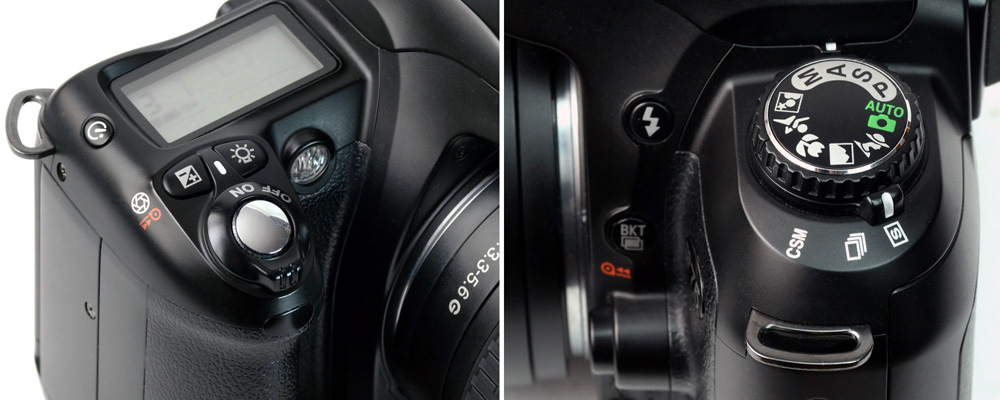
So, why would I choose to load film into the F75 instead of the F55? A few reasons. The biggest are the F75’s depth-of-field preview button and the camera’s compatibility with Nikon’s image-stabilized (VR) lenses. I have one of those that I use with some regularity. In addition, the F75 autofocuses with AF-S lenses, which its cheaper sibling doesn’t. You also get a number of customizable features and a dedicated switch for selecting the autofocus mode, which some might find helpful. Both cameras are auto-ISO (DX) only, but the F75 allows you to dial in +/˗ 3 stops of exposure compensation compared to the F55’s +/˗ 2 stops. That makes the inability to directly set the ISO something of a non-issue, at least for me. I also like that the F75 gives me a frame count even when it’s switched off — something the F55 does only when it’s powered on. It’s a small thing, but one that I appreciate.
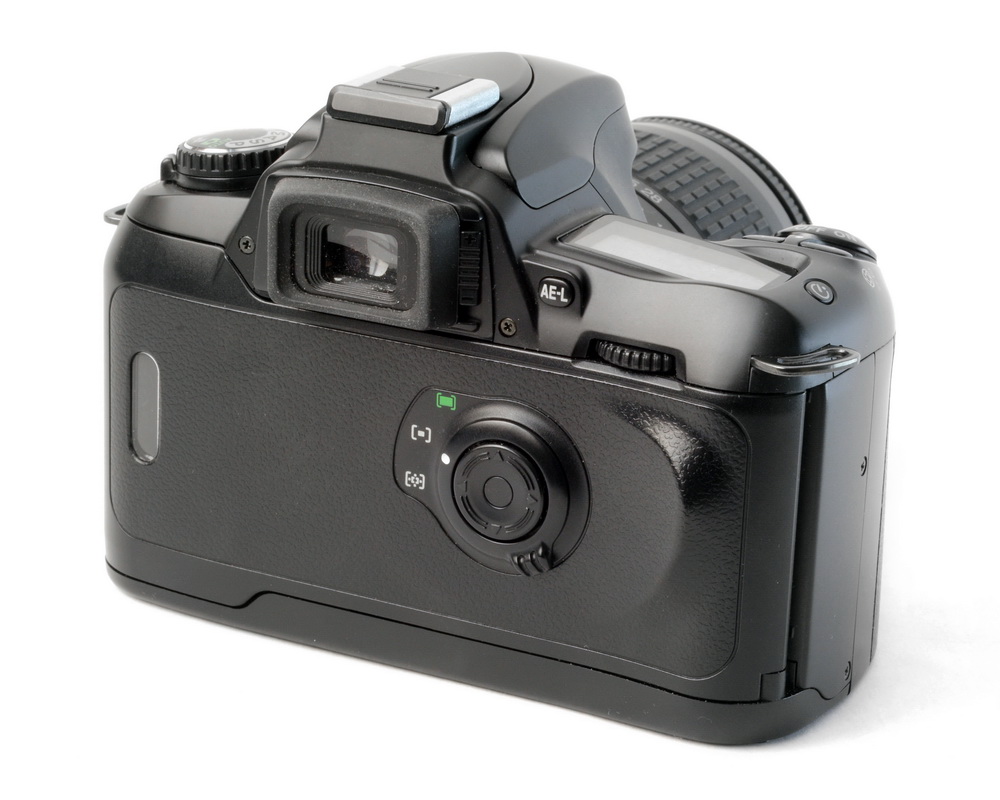
And where does the F75 have an edge over my F80? Weight is the biggest advantage (406 grams versus 550 grams) — something that’s a consideration for travel and hiking. But I also find the F80 feels noticeably chunkier in the hand compared with the F75. And given that the F75 was introduced several years after the F80 and is less well known, chances are you’ll be able to get a newer one in good working order and pay less money. That aside, there’s no doubt that the F80 is a superior camera in just about every way. However, when it comes to producing images, the F75 is right there.
In truth, all three cameras — the F55, F75, and F80 — are more alike than different and each one offers an enjoyable shooting experiences. At a basic level they mostly do the same thing the same way and all are capable of splendid results — the lens you stick on the front matters far more than which body you use.
Released in 2003, the F75 was the final film SLR introduced by Nikon. Thanks to that inauspicious timing, it didn’t stand a chance against the digital tsunami that was about to hit the photographic world. But the good news from today’s perspective is that if you find an F75, it’s likely to have seen minimal use and is probably in good shape. And that might add up to a camera that’s “just right!”
Click here for some F75 sample images.
Did you find this article interesting or helpful? If so, consider using this link the next time you shop at Amazon.com. Better yet, bookmark it for future use. Thanks to Amazon’s associates program, doing so costs you nothing yet helps keep this site up and running. Thanks!
 Subscribe with RSS